Cart
Your shopping cart is empty!
It's never too late to make things right :)



Probably, almost every one of us, regardless of age, has experienced unpleasant painful sensations in the joints at least once in our lives. Joint pain can be caused by a variety of reasons - from injuries and severe emotional stress to serious diseases, which, in the absence of adequate and timely treatment, can lead to loss of mobility in the affected joints.

Most often, a joint disease called osteoarthritis occurs because with age or constant physical exertion, the cartilage in the joint is destroyed, causing inflammation. The joint becomes denser, loses mobility, and bone protrusions and growths appear.
Osteoarthritis is a pathology whose frequency increases rapidly with age. If at 25–30 years old this disease is practically not observed, then by 65–70 years old the prevalence of osteoarthritis of the knee joints exceeds 1000 per 100 thousand population. In the USA, osteoarthritis ranks second after orthopedic pathology in the ranking of diseases that limit the functional activity of patients.
INTERESTING TO KNOW!
In Ukraine, a high prevalence of osteoarthritis is noted. Thus, this pathology is detected in 47.7% of women aged 40-49, 62.8% - 50-59, 74.9% - 60-69, 79.9% - over 65. In men, these figures are 56.6; 72.3; 83.7 and 88.6%, respectively
Of course, excess weight also has a strong effect on the joints - each kilogram gained significantly increases the load on the so-called supporting joints - hip and knee. According to statistics, knee joint diseases in overweight people occur four times more often than in those whose weight is within normal limits.
Incredible protein
A long search for substances that could restore the functions of connective tissue led to an amazing discovery: the capabilities of a special protein - collagen.
Collagen is a fibrillar protein that forms the basis of the body's connective tissue (tendon, bone, cartilage, dermis, etc.) and provides its strength and elasticity. Collagen is found in multicellular animals and is absent in plants, bacteria, viruses, protozoa, and fungi. It is the main component of connective tissue and the most abundant protein in mammals, constituting 25 to 35% of the proteins in the entire body. The composition of collagen fibers, like any protein, is amino acids, the main ones of which are hydroxylysine and hydroxyproline.
According to the source of production, there are animal (it is obtained as a result of processing cuts from cattle hides or meat and bone mass of birds), vegetable (hydrolyzed wheat protein) and marine (produced from skin and meat and bone mass of fish) collagen.
THIS IS INTERESTING!
Collagen in the matrix of articular cartilage is 50-70%. Regardless of age, men have a higher collagen density than women. This is one of the reasons why men, as a rule, age more slowly than women.
Collagen molecules create a special structure in human skin that provides cell support. Collagen is responsible for the elasticity, strength and elasticity of tissues, their youth, smoothness and proper hydration of the skin, as well as for the continuous renewal of its cells.
The fibers formed by collagen are able to stretch and regain their original shape. With age, this ability decreases, especially after menopause.
By the age of 25, collagen levels decrease. The first sign that collagen production is impaired is the appearance of fine lines. If nasolabial wrinkles appear, this is a signal that the production of your own collagen protein is decreasing. In addition, invisible changes occur in the joints.
Unfortunately, hormonal aging of the skin cannot be reversed, but it can be slowed down.
Among proteins, collagen is probably the strongest in the body. Its fiber can easily withstand a load of 6 kilograms per 1 square millimeter. Such high strength is explained by the repeated twisting of the protein.
Collagen plays a huge role in the vital activity of the human body. In youth, the exchange of collagen and elastin is characterized by a long-term dynamic equilibrium: the constant synthesis of these proteins is accompanied by their enzymatic breakdown.
In addition, collagen is responsible for numerous processes in the body:
Studies have shown that daily use of 2.5% collagen for 14 weeks has a positive effect on muscle mass growth (by 17%) and an increase in bone density.
Collagen in the world of sports
In total, 19 types of collagen are secreted in the body, but to maintain joint flexibility, the production of three is necessary.
It is worth saying that the increased physical exertion experienced by athletes significantly increases the importance of a sufficient amount of collagen in their body. For those involved in sports, it is especially important that collagen:
This protein is especially important for bodybuilders, weightlifters, powerlifters who have injuries, who experience discomfort (pain, crunch, limited mobility) during loads on joints, cartilage and ligaments.
Get what you need
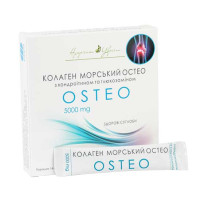
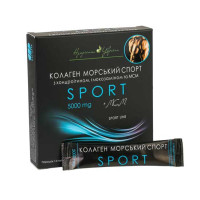
In order to fill the lack of collagen in the body, special complexes have been developed that already contain ready-made collagen. Thus, the company "Unatis" presents on the pharmaceutical market products designed to once again eliminate problems associated with connective tissue disorders. These are Collagen Marine Osteo with Chondroitin and Glucosamine and Collagen Marine SPORT with Chondroitin, Glucosamine and MSM, which promote the absorption of proteins in the body, stimulate the effect on protein metabolism, strengthen joints and prevent their premature destruction.
In their composition, the main role belongs to marine collagen Weishardt - the world leader in the production of proteins for health.
THIS IS IMPORTANT!
Marine collagen produced by Weishardt: is highly purified (99.8%); does not contain GMOs, fats, carbohydrates and purines; is highly bioavailable; has successfully passed clinical trials;
Marine collagen Weishardt is closest in amino acid composition to human, which contributes to a good degree of digestibility. As a raw material for Weishardt collagen, a substrate from the skin of marine fish caught in ecologically clean areas, far from large megacities and enterprises, is used. Careful control over the source of raw materials prevents toxins, drugs, and microorganisms from entering the product. Further, thorough purification and enzymatic hydrolysis of collagen occur. As a result, the collagen molecule is divided into fragments - peptides, which are easily absorbed in the digestive tract and supply the necessary building material for the synthesis of its own collagen in the body.
Collagen in the matrix of articular cartilage is 50-70%. Regardless of age, men have a higher collagen density than women. This is one of the reasons why men tend to age more slowly than women.
In addition to Weishardt collagen, the powder products are supplemented with special substances recognized by world public practice as effective components for joint restoration.
Components that enhance the effect
Glucosamine and chondroitin sulfate, which are important components of Marine Collagen Osteo with Chondroitin and Glucosamine and Marine Collagen SPORT with Chondroitin, Glucosamine and MSM, are known worldwide as the main chondroprotectors.

Glucosamine and chondroitin sulfate are used in the treatment of osteoarthritis and similar diseases as natural metabolites as agents capable of providing a protective effect on cartilage.
Numerous studies of the pharmacological effects of glucosamine have established a beneficial effect on cartilage metabolism - strengthening anabolic and weakening catabolic processes. Stimulation of proteoglycan and collagen synthesis by glucosamine, increased production of extracellular matrix components has been established. Glucosamine also exhibits a moderate anti-inflammatory effect on various models of inflammation.
It is known that chondroitin sulfate stimulates the synthesis of natural cartilage lubricants - hyaluronic acid and proteoglycans and inhibits the action of proteolytic enzymes, significantly reducing the activity of chondroitinase in the synovial fluid. Interestingly, chondroitin sulfate has a pronounced tropism to tissues rich in glycosaminoglycans and, in particular, to articular cartilage. It is noted that chondroitin sulfate also participates in the process of bone mineralization, regulating calcium balance and promoting ossification.
In addition, studies have shown that chondroitin exhibits anti-inflammatory activity and also reduces pain syndrome.
Other studies have shown that chondroitin sulfate and glucosamine have not only a symptomatic effect, but are also able to favorably affect cartilage metabolism, restoring its structure and normalizing metabolism. After all, these chondroprotectors really have a protective effect on articular cartilage, preventing its destruction and promoting its restoration.
The joint use of chondroitin sulfate and glucosamine provides a faster saturation of the body with chondroprotectors compared to the action of one component, as well as a more pronounced clinical effect. Their joint appointment is indicated when it is necessary to enhance the effect, when the effect of one drug is insufficient. This approach allows you to reduce the dose of each drug.
Methylsulfonylmethane (MSM), which is part of Marine Collagen SPORT, contains sulfur, which is necessary for the formation of connective tissue.
Taking MSM helps to slow down the age-related decrease in mobility and flexibility of joints and ligaments, prolonging their youth. In addition, sulfur is involved in the formation of chondroitin and glucosamine - components of cartilage tissue, which ensure freedom and pain-free movements.
Due to the active participation of sulfur in the processes of tissue renewal, taking MSM helps to maintain the functional state of joints in normal, prevent pain, accelerate the recovery of joints and muscles after training and other heavy physical exertion.
In addition, sufficient sulfur intake into the body helps to maintain healthy skin and nails, and shine of hair. MSM also contributes to the production of its own collagen, maintaining youthful skin.