Cart
Your shopping cart is empty!
It's never too late to make things right :)



Sugar is one of the most controversial products in the kitchen. For centuries, it was a luxury, but over the past few centuries, its use has become everyday. Let's figure out what consequences this has led to.
What is sugar
Sugar is the common name for sucrose. It is obtained by processing the juice of sugar cane and sugar beets. Sucrose is a disaccharide carbohydrate consisting of two molecules: glucose and fructose.
Why is sugar important for the body?
Glucose is a vital substance. It is a source of nutrition for cells, including the brain. It increases energy levels, supports the barrier function of the liver and controls hunger levels.
So why is sugar harmful?
If the individual components of sugar perform such important functions, why is this product considered harmful?
The hormone insulin is responsible for converting glucose into energy. If it is not enough or its synthesis is impaired, diabetes occurs - a condition when the body cannot cope with the processing of incoming sugar. Diabetes can occur both due to genetic defects and excessive consumption of foods containing glucose. An excess of this monosaccharide, which the body does not have time to process into energy immediately, causes an increase in the amount of lipids and increases blood viscosity, which leads to cardiovascular disorders.
If the body does not have time to process the incoming glucose into energy, it creates energy reserves. These reserves are fat deposits. They are formed when a person consumes food with an excessive amount of carbohydrates, and the body does not need such an amount of energy or does not have the resources (insulin) to quickly process them.
When bacteria in the oral cavity interact with sugar, the acidity level increases. The acidic environment contributes to the erosion of tooth enamel, which leads to the appearance of caries.
Excessive consumption

Many people don’t even suspect that sugar is found not only in sweet foods. Let’s take an average grocery basket: pastries (not only sweet ones), sauces, canned goods, sausages, frozen meals, yogurts, bagged cereals, muesli, juices and alcohol – sugar is everywhere. It makes foods tastier and more desirable, improves the texture of dishes and increases their shelf life. Sugar is included in many low-fat products so that their taste does not seem empty due to the lack of fat.
Empty calories
Sugar is a simple carbohydrate with a high energy value: from one gram the body receives four kilocalories. It sounds innocent, but if you look at sweet drinks and juices (on average 10 g of sugar per 100 ml), it becomes clear that you can imperceptibly replenish your diet with a hundred or two empty calories. And they, in turn, can easily turn into extra pounds due to a lack of physical activity.
Habits and addiction
Harvard professor of endocrinology David Ludwig found that foods with a high glycemic index (table sugar is one of them) affect the nucleus accumbens, a brain region that is activated in gamblers and drug addicts. The neural pathways that crave your favorite product are strengthened, and the number of dopamine receptors (dopamine is responsible for pleasure) decreases. And next time, to experience the same pleasant sensations, you will have to increase the “dose”.
And where is the golden mean?
Glucose is really vital for the body. But sugar is not the best source of it.
To get other useful elements along with energy, you should choose complex carbohydrates: whole grain products, cereals, vegetables and fruits. They are digested more slowly and contain not only sugar, but also vitamins and trace elements.
But if you really love sweets, remember the permissible norms. The World Health Organization recommends consuming no more than 50 g of sugar, taking into account all the products consumed.
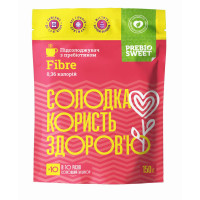
For those who are trying to adhere to the permissible norms, we recommend replacing some of the sugar with sweeteners. Prebiosweet Stevia, for example, does not contain calories and has a low glycemic index. With it, you can drink sweet tea or another of your favorite drinks and not worry about excess carbohydrates.
SOURCES:
Ng, S.W., Slining, M.M., & Popkin, B.M. (2012). Use of caloric and noncaloric sweeteners in US consumer packaged foods, 2005-2009. Journal of the Academy of Nutrition and Dietetics , 112(11), 1828-1834.e1821-1826.
Hill JO and Prentice AM (1995) Sugar and body weight regulation. American Journal of Clinical Nutrition 62 (suppl) 264S-74S
Hussein I, Pollard MA and Curzon MEJ (1996) A comparison of the effects of some extrinsic and intrinsic sugars on dental plaque pH. International Journal of Paediatric Dentistry 6(2):81-87
Bolton-Smith C (1996) Intake of sugars in relation to fatness and micronutrient adequacy. International Journal of Obesity 20(Suppl 2):S31-S33
WHO calls on countries to reduce sugars intake among adults and children
http://www.who.int/mediacentre/news/releases/2015/sugar-guideline/en/