Cart
Your shopping cart is empty!
It's never too late to make things right :)



What can you use instead of sugar in a recipe to maintain the familiar sweetness? This is a common question whenever you want to prepare your favorite dish with less regular sugar.
However, different sugar substitutes have different levels of sweetness, so they cannot all be replaced in the same proportion. For some products, the amount will be almost the same as the amount of sugar, while for others, just a few grams will be enough.
Below, we have prepared a convenient table to help you quickly convert the amount of sugar in a recipe.
For preparing homemade dishes and desserts, you can use:
Dietline Sorbitol
Dietline Erythritol
Dietline Xylitol
Prebiosweet Stevia
Prebiosweet Fiber
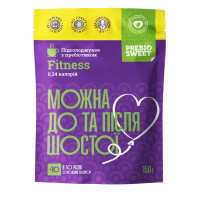
Prebiosweet Fitness
Before replacing sugar, pay attention to the recommended dosage of the specific product. This is especially important for complex sugar substitutes, which can have a significantly higher sweetness than regular sugar.
For Prebiosweet Stevia, Prebiosweet Fiber and Prebiosweet Fitness, a simple ratio is used:
1 g of sugar substitute = 10 g of sugar.
In other words, one measuring spoon weighing 1 g provides approximately the same sweetness as 2 teaspoons of regular sugar, or 10 g of sugar.
This makes recipe conversion very simple:
| Sugar in the recipe | Sugar substitute |
|---|---|
| 10 g | 1 g |
| 20 g | 2 g |
| 30 g | 3 g |
| 50 g | 5 g |
| 100 g | 10 g |
| 150 g | 15 g |
| 200 g | 20 g |
| 250 g | 25 g |
| 300 g | 30 g |
For example, if a recipe calls for 200 g of sugar, use approximately 20 g of Prebiosweet Stevia, Prebiosweet Fiber or Prebiosweet Fitness instead.
This is a significantly smaller amount of product, so it is important to use an accurate scale or measuring spoon.
Dietline Sorbitol has a sweetness close to that of sugar, although it is slightly less sweet. Therefore, a little more may be needed in recipes.
As a general guideline:
100 g of sugar = 100–120 g of Dietline Sorbitol.
For example, if a recipe contains 200 g of sugar, you can use approximately 200–240 g of sorbitol.
Keep in mind that sorbitol has its own properties and can affect the texture of the finished dish, so when trying a recipe for the first time, it is better to start with the recommended amount and adjust it if necessary.
Dietline Erythritol is less sweet than regular sugar, so a larger amount is usually required.
The approximate ratio is:
100 g of sugar = 120–130 g of Dietline Erythritol.
For example:
200 g of sugar = approximately 240–260 g of erythritol.
The exact amount can be adjusted depending on the recipe and your preferred level of sweetness.
Dietline Xylitol has approximately the same sweetness as sugar, making it convenient to use at a ratio close to 1:1.
100 g of sugar ≈ 100 g of Dietline Xylitol.
This is especially convenient for recipes where the amount of dry ingredients is important.
It is important to understand that sugar in baking is responsible for more than just sweetness.
It also affects:
the structure of the dough;
moisture;
texture;
browning of the crust;
consistency of the finished product.
Therefore, the result may differ slightly from a traditional recipe when sugar is replaced.
For cookies, cheesecakes, casseroles and many homemade desserts, replacement according to the table is relatively straightforward.
However, in sponge cakes, meringues and certain types of dough, sugar plays an important technological role. In these recipes, simply replacing sugar by weight is not enough — the properties of the specific sugar substitute must also be taken into account.
Ready-to-use Prebiosweet sugar substitutes are particularly convenient for beverages.
For example, if you normally add 2 teaspoons of sugar, that is approximately 10 g of sugar. For Prebiosweet Stevia, Prebiosweet Fiber or Prebiosweet Fitness, 1 g, or one measuring spoon, is sufficient.
Therefore, you do not need to add the sugar substitute in an amount equal to the amount of sugar.
This is why it is important to know the sweetness level of the specific product before using it.
There is an important point to consider when making jam: sugar in traditional jam is responsible for more than just sweetness. It also affects the consistency and storage properties of the product.
When making jam with a sugar substitute, pectin or agar-agar can be used to achieve the desired thick consistency.
Ingredients:
Berries, fresh or frozen — 2.33 kg
Sorbitol — 900 g
Apple pectin — 40 g
Lemon or lime juice — 1–2 teaspoons
Wash, sort and puree the berries as desired. Place them in a saucepan, add the lemon juice and heat.
Mix the pectin with the sorbitol beforehand so that it is evenly distributed throughout the berry mixture.
Add the sugar substitute to the hot berries, stirring constantly. Bring to a boil and cook for 2–3 minutes.
Pour the finished jam into clean, dry jars.
Since this recipe does not contain a large amount of regular sugar, which traditionally helps preserve jam, it should not be stored at room temperature.
Store the finished jam in the refrigerator at approximately +2 to +6°C.
If you want to keep the jam for a longer period, a convenient option is to freeze it in portions. After thawing, the product should be stored in the refrigerator.
For long-term storage of jam at room temperature, a separately developed and validated canning method is required. Simply replacing sugar with a sugar substitute does not make the product suitable for room-temperature storage.
Pectin is most commonly used for jam because it helps create a consistency similar to traditional fruit or berry jam.
Agar-agar can also be used as a thickening agent. It produces a firmer, more jelly-like texture.
The amount of pectin or agar-agar should preferably be determined according to the manufacturer's recommendations for the specific product, since the concentration and properties of different thickeners can vary.
Because sugar substitutes have different levels of sweetness.
For example, to replace 100 g of sugar, you need approximately:
100–120 g of Dietline Sorbitol
120–130 g of Dietline Erythritol
approximately 100 g of Dietline Xylitol
10 g of Prebiosweet Stevia
10 g of Prebiosweet Fiber
10 g of Prebiosweet Fitness
Prebiosweet Stevia, Prebiosweet Fiber and Prebiosweet Fitness have a significantly higher sweetness than sugar: 1 g of the product corresponds to approximately 10 g of sugar.
Replacing sugar in a recipe is much easier when you know the correct ratio.
For Dietline Sorbitol, Dietline Erythritol and Dietline Xylitol, the amount is calculated in grams that are relatively close to the amount of sugar.
For Prebiosweet Stevia, Prebiosweet Fiber and Prebiosweet Fitness, a much smaller amount is required:
1 g of sugar substitute = approximately 10 g of sugar = 2 teaspoons of sugar.
Therefore, to convert a recipe, simply divide the amount of sugar by 10.
For example:
100 g of sugar ÷ 10 = 10 g of sugar substitute.
200 g of sugar ÷ 10 = 20 g of sugar substitute.
300 g of sugar ÷ 10 = 30 g of sugar substitute.
Save this table so that next time you can quickly convert any recipe and prepare your favorite dish with the desired level of sweetness.