Cart
Your shopping cart is empty!
It's never too late to make things right :)



Stimulant laxatives are divided into two main groups of substances:
Anthraglycosides
Senna plant extracts are the most studied for their safety, reflecting the commercial importance of senna extracts and also related to the withdrawal of the synthetic anthraquinone derivative danthrone from the market in 1987 due to its mutagenic properties. As a result, the mutagenic and genotoxic properties of senna and its derivatives have been studied in detail.
The first evidence of the potentially dangerous effects of stimulant laxatives appeared in 1968 and 1972, and were further studied by Steer & ColinJones, Riemann et al, Riemann & Schmidt. The results of these studies showed that anthraquinone-containing laxatives cause degenerative changes in the nervous system of the large intestine. More recent studies have shown a more complex picture.
Hietala et al. proposed a distinction between purified and crude senna preparations, as it was found that it was possible to differentiate the laxative and toxic effects of different senna preparations. While purified preparations are virtually harmless, typical unpurified forms contain more toxic (3-5 times) additives but have less laxative effects. However, these studies only looked at acute toxicity (24 hours) and used very large doses.
The mutagenicity of crude senna and its glycosides was studied by Sandnes et al. using various strains of Salmonella typhimurium. Overall, the data indicate that purified senna glycosides do not have mutagenic potential. The exception was strain TA 102, which showed a low but clearly dose-dependent mutation rate. Unidentified components included in crude senna preparations showed low but dose-dependent mutagenicity (above TA 98), which was considered biologically significant. Presumably, the mutagenic components are flavonoids. The authors conclude that purified senna glycosides are preferable to crude senna extracts.
Emodin, an anthraquinone from various plant extracts used as laxatives, is mutagenic, but its mutagenicity depends on an activation system that is not present in mammals. Bosch et al. found that, despite a positive test in Salmonella strains, emodin poses a relatively low risk of mutagenicity in humans. Murakami et al. (47) found that hydroxyemodin (1, 3, 8 - trihydroxy - 6 - hydroxymethylanthraquinone) is mutagenic in Salmonella, given the presence of an activation system (P450). The significance of this fact for human mutagenicity has not been discussed. Mori et al. observed a pronounced carcinogenic effect on the stomach, liver and colon after chronic administration of 1-hydroxyanthraquinone to rats.
Studies on Salmonella strains and rat tissue cultures of an extract of Rhamnus frangulae (cascara bark) have shown that this agent is genotoxic. Epidemiological evidence for a causal relationship between the misuse of anthraquinone glycosides and colorectal cancer was obtained by Siegers et al in a large colonoscopy study consisting of two parts.
In a retrospective study of 3049 patients and a prospective study of 1095 patients who underwent diagnostic colonoscopy, the authors found an increased risk of colorectal carcinoma in patients who used anthraquinone laxatives for a long time. This statement is based on the fact that the presence of Pseudomelanosis coli is a typical sign of abuse of these substances. In discussing the results of the study, the authors also took into account that other factors, such as constipation or dietary habits, such as a high intake of fat, may also play a role in the development of colorectal cancer. The risk factors described were well known from studies on rodents. However, the authors emphasize that the presence of Pseudomelanosis coli is a manifestation only of laxative abuse. The article does not contain information about possible differences between purified and unrefined senna extracts. However, since the study was conducted in Germany, where practically only unrefined senna preparations are used, the presence of a risk of colorectal cancer may be associated with the presence of carcinogenic substances in them.
Pharmacological and toxicological data on anthralicoside laxatives are provided by Westendorf. The active principle of these drugs is anthrones, which are broken down by bacteria into anthraglycosides and which apparently stimulate the synthesis of prostaglandins. The action of anthrones may be the cause of the inflammatory process discovered by the author. Anthrones are also much more cytotoxic than anthraglycosides, and in this respect can be compared with cytostatics. In general, the results of the studies concluded that long-term use of these drugs carries a significant risk of complications. However, the warning against long-term use of these drugs does not prevent their abuse. The author emphasizes that the risk is not short-term or irregular use, but chronic - in the toxicological sense - use of these drugs.
In many studies that did not identify risk factors associated with the use of laxatives, it is repeatedly mentioned that the conclusions of the studies relate only to short-term use. Muller et al. found genotoxic effects of emodin, aloe-emodin and danthrone on mammalian cell cultures. A weak genotoxic effect of sinnoside B and rhein was found by Mukhopadhyay et al. in mouse bone marrow cells. Mereto et al. found signs of carcinogenic effects of these agents on the large intestine of rats.
Patel et al. described the case of an 18-year-old patient with leiomyosarcoma of the small intestine; the history of the disease was noted long-term use of danthrone in childhood. Van Gorkom et al. reported that in patients who underwent colonoscopy preparation using senna and polyethylene glycol (PEG), compared with patients who used PEG alone, a significant increase in the number of mononuclear infiltrates in the lamina propria of the intestinal mucosa was found. Earlier, Kleibeuker et al. observed a very high level of proliferation in the sigmoid colon after colon cleansing with anthraquinones. According to the results of recent studies, highly purified senna extracts added to the enema content caused massive cell loss, the formation of short crypts and increased cell proliferation, compared with enemas without senna. These data are considered as a possible explanation for the alleged carcinogenic effect of chronic use of sinnosides.
Other studies have not shown the above effect. Development of drug tolerance and hyperaldosteronism after chronic treatment of rats with sinnosides have also not been observed. The studies of Tzavella et al. have left the question unresolved as to whether the reduced VIP and somatostatin concentrations in the large intestine of rats are a result of chronic administration of high doses of anthraglycosides, reflecting damage to the enteric nervous system, or are directly related to the pharmacological action of the drugs.
In terms of mutagenicity, senna extracts (and other plants) can probably be divided into two groups: while purified senna exhibits mutagenic potential only in Salmonella but not in mammals, other components of the extracts have some mutagenic potential and should therefore be eliminated from preparations intended for use.
In rodent studies, Lyden-Sokolowski et al. did not observe a carcinogenic effect of sinnosides in rats, and Siegers et al. demonstrated that sinnosides do not induce the growth of dimethylhydrazine-induced colorectal tumors in mice.
Metabolites of anthraquinones can be absorbed and enter the enterohepatic circulation. A significant part of the administered drug accumulates mainly in the kidneys and is eliminated very slowly. An international scientific research group strongly advises against daily use of stimulant laxatives such as anthraglycosides, bisacodyl and phenolphthalein. Incorrect, long-term use and daily use can cause interactions between laxatives and various macromolecules in the kidneys. In an epidemiological study, the authors found, quite unexpectedly, an increased risk of developing carcinoma, especially of the urinary tract, in individuals who used anthraglycosides (risk ratio 1.99) and diphenolmethane derivatives (risk ratio 2.03).
Not only the mutagenic and genotoxic effects of herbal laxatives have been described, but also the structural and functional disorders caused by them.
While Hietala et al. recommend a distinction between purified and crude extracts, Dufour & Gendre advise a distinction between free anthraquinones and their glycosides. These researchers found clear differences: anthraquinone glycosides do not affect cellular structures, while free anthraquinones (1-8-dihydroxyanthraquinone = danthrone) cause degenerative changes in nerve endings.
It is worth noting the call of the US Food and Drug Administration (FDA) for intensive research, including work on identifying the effects of the components contained in senna extracts (80). The FDA indicates that doubts remain as to whether “pure” sinnosides A and B pose a risk to patients’ health.
Diphenylmethane derivatives
Phenolphthalein is the oldest member of this group of drugs, which also includes bisacodyl and sodium picosulfate. The carcinogenic and toxic effects of phenolphthalein are now so well known that the drug has been withdrawn from production in the United States, Canada, and Italy, and in some countries, manufacturers have destroyed stocks of the drug. The carcinogenicity and toxicity of phenolphthalein have been proven by numerous studies. Phenolphthalein has been described to have carcinogenic effects on various tissues, including the kidneys, as well as damaging effects on DNA. Thus, the question arises: are stimulant synthetic laxatives really safer than herbal laxatives? Some manufacturers have replaced phenolphthalein with senna. In 1998, the FDA commissioned a study on the mutagenicity of bisacodyl, given its similarity to phenolphthalein. In early 1999, the FDA officially banned phenolphthalein in the United States.
There is also a question about the toxicity of other stimulant laxatives, such as bisacodyl or senna. Bisacodyl administered rectally may cause inflammation of the rectal mucosa. In rats, bisacodyl appears to promote urolithiasis, and Toyoda et al. observed impaired proliferation of the bladder mucosa. Wu et al. (88) report a case of urogenital stone formation following bisacodyl abuse. The Berlin Epithelial Carcinoma Study found a significant increase in the incidence of urinary tract cancer in patients who used anthraglycosides, bisacodyl, and sodium picosulfate; Phenolphthalein is relatively uncommon in Germany, so there is little data on the drug. The incidence of urinary tract carcinoma (kidney, ureter, bladder) was significantly higher in patients who used chemical or herbal laxatives (hazard ratios 1.99–2.03). As in the Siegers et al. study, the risk was not large enough to be clinically significant; it is likely that these risk factors are only identified in large-scale studies.
Various diseases caused by stimulant laxatives
Silk et al., Levine et al., Armstrong et al., FitzGerald & Redmond, and Fichter & Chlond have reported the development of hypertrophic osteoarthropathies following prolonged use of stimulant laxatives. Other reports describe hemorrhagic colitis following ingestion of sinnosides A and B, hepatitis following senna abuse, and contact dermatitis caused by danthrone. Nishikawa and Kast found that sodium picosulfate dose-dependently reduced the growth and mitotic rate of human liver cell cultures. In a population-based study of laxative use in Germany, Knopf et al. found evidence that serum potassium concentrations in laxative users were significantly lower than in nonusers.
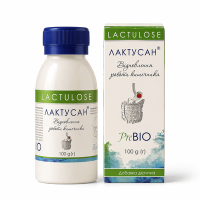
Lactulose
Lactulose is a disaccharide (4-0-bD-galactopyranosyl-D-fructose) that is not broken down in the small intestine of mammals. Lactulose is absorbed only in small quantities (0.2 - 2.8%) and is determined unchanged in the urine. Thus, lactulose, like dietary fiber, reaches the large intestine, where it is completely processed into short-chain fatty acids, H2 and CO2 by saccharolytic bacteria, in particular bifidobacteria and lactobacteria.
Lactulose has been used in the treatment of constipation for over 40 years and for 30 years in the treatment of hepatic encephalopathy (HE). The doses used in the latter case are four times higher than the doses used for the treatment of constipation. Patients with HE who frequently and continuously use lactulose are under constant medical supervision, unlike people who take other laxatives. During the entire period of use of lactulose, no direct or indirect evidence of its mutagenic, genotoxic or teratogenic effects has been obtained. In animal models (rats and rabbits), no teratogenic or toxic effects or effects on reproduction were found, even at high doses.
A review of four publications on hypernatremia observed in lactulose-induced diarrhea was conducted by Conn & Bircher. In all the cases described, patients with PSE received high or very high doses of lactulose, but the doctors did not pay attention to the patients' loose stools. The authors of the review of these publications conclude that the term hypernatremia is incorrect in this context; it would be more correct to consider the described condition as part of the dehydration syndrome, rather than as a side effect of the drug.
In general, it is safe to say that the safety of lactulose as a laxative is best demonstrated by the fact that there is no publication on the subject. Conn & Bircher comment on this: "A chapter on the development of complications from the use of lactulose would be very short. Despite the side effects from the gastrointestinal tract, this indigestible carbohydrate and its biodegradation products do not form any toxic substances." Nunez and Robinson consider lactulose to be one of the safest laxatives. The pharmacology of lactulose shows that this synthetic disaccharide has an effective prebiotic effect.
Discussion and conclusion
Laxatives have a high potential for abuse. Since they are sold over the counter, doctors cannot influence the frequency of use or the dosage of the drug by patients. Stimulant laxatives are the most commonly abused because they are relatively inexpensive and the nature of their effects is such that they appear to be the most suitable product for consumers. Stimulants of chemical and plant origin can certainly be considered pharmacologically active and chemically aggressive substances.
It is interesting to note that there is no evidence of abuse of lactulose and PEG. Lactulose was first used as a laxative for children 40 years ago, and during this period there has been no information about any risk or potential for abuse. Since lactulose is non-toxic, this drug is one of the safest laxatives and is suitable for long-term use. The prebiotic effect of lactulose is also an additional positive property of the drug that other laxatives do not possess, which is especially important with long-term use.
Literature:
8.Fridtjof Hallmann Med Sci Monit, 2000 №6(3), 618-628