


Cart
Your shopping cart is empty!
It's never too late to make things right :)


-600x500.png)
Today, people are increasingly talking not only about vitamins, minerals and protein, but also about the gut microbiota — the microorganisms that live in the digestive tract and interact with the body.
One way to support a favorable environment for these microorganisms is through prebiotics.
But what exactly are prebiotics? How are they different from probiotics? And why can they be relevant to everyday nutrition?
A prebiotic is a substrate that is selectively utilized by host microorganisms and provides a health benefit. This is the definition used by the International Scientific Association for Probiotics and Prebiotics (ISAPP).
In simple terms, prebiotics can be viewed as a food source or substrate for certain microorganisms in the microbiota.
They are not live bacteria. Instead, they are substances that certain microorganisms can utilize.
Prebiotics can occur naturally in foods or be added to specially formulated foods and dietary products.
These two terms are often confused, but they refer to different things.
Probiotics are live microorganisms that, when consumed in adequate amounts, may provide a health benefit.
Prebiotics are substrates selectively utilized by microorganisms and associated with beneficial effects for the host.
In very simple terms:
Probiotics = live microorganisms.
Prebiotics = substrates used by certain microorganisms.
They are not interchangeable concepts.
Prebiotics are primarily interesting because of their interaction with the microbiota.
When microorganisms utilize prebiotic substrates, they can produce metabolites, including short-chain fatty acids. Research has associated certain prebiotics with support for normal digestive function and other physiological effects. However, the effect depends on the specific substance, amount consumed and individual factors.
Therefore, it is more accurate to describe prebiotics as one component of nutrition that interacts with the microbiota, rather than as a universal solution for health.
Some prebiotic components naturally occur in plant-based foods.
Foods that may contain prebiotic components include onions, garlic, bananas, chicory root and Jerusalem artichokes.
The concentration of prebiotic components in ordinary foods can vary. For this reason, certain prebiotic substances are also used as ingredients in specially formulated foods and dietary products.
Inulin is a plant-derived dietary fiber and one of the most extensively studied prebiotic components.
It occurs naturally in chicory root and several other plants and is widely used as a food ingredient.
Inulin is used in Prebiosweet Fibre.
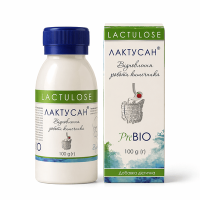
Lactulose is another component used in products with a prebiotic focus.
It is not a live microorganism and therefore is not a probiotic. It can serve as a substrate available to microorganisms in the intestine.
Lactulose is included in several Prebiosweet products, including Fitness, Stevia, Smart and Chef Confectioner.
No.
This is an important distinction.
Dietary fiber and prebiotics are not synonymous. Most established prebiotics are dietary fibers, but not every dietary fiber meets the modern scientific definition of a prebiotic.
Therefore, simply seeing the words “dietary fiber” on a product label does not automatically mean that the ingredient is a prebiotic.
Prebiotic components can be part of a varied diet that includes a range of plant foods.
Vegetables, fruits, whole grains and other plant-based foods can provide different types of dietary fiber and prebiotic components.
Prebiotic-containing foods should not be viewed as a replacement for a varied diet. They can simply be one part of a balanced approach to nutrition.
The Prebiosweet concept combines sweet taste with the use of ingredients with a prebiotic focus.
Different products in the range have different formulations and intended uses.
| Product | Prebiotic component | Main use |
|---|---|---|
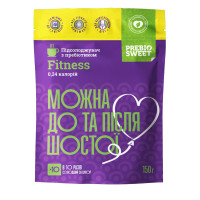
| Prebiosweet Fitness | Lactulose | Drinks, desserts, home baking |
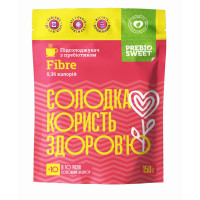
| Prebiosweet Fibre | Inulin | Drinks, desserts, home cooking |
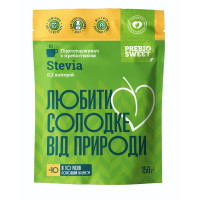
| Prebiosweet Stevia | Lactulose | Drinks and desserts |
| Prebiosweet Smart | Lactulose | Everyday use, drinks, desserts |
| Prebiosweet Chef Confectioner | Lactulose | Baking, creams, cakes, ice cream and desserts |
The right product therefore depends not only on sweetness, but also on the formulation and the way you plan to use it.
A conventional sweetener primarily addresses the task of replacing sugar and providing sweetness.
Prebiosweet takes a broader approach: depending on the product, the formulation includes prebiotic components such as lactulose or inulin.
This allows consumers to choose a product according to different needs:
for everyday use — Fitness or Smart;
if inulin is important — Fibre;
if you prefer stevia — Prebiosweet Stevia;
for confectionery applications — Chef Confectioner.
The first step is to look at the actual composition of the product, rather than relying only on the word “prebiotic” on the package.
If you are specifically looking for inulin, consider Prebiosweet Fibre.
If you are looking for a product containing lactulose, you can consider Fitness, Stevia, Smart or Chef Confectioner, depending on the intended use.
If your main goal is baking and confectionery, Chef Confectioner is the most relevant option within the range.
Prebiotics are more than just a trend on a product label.
They are a distinct group of substances that interact with microorganisms in the body and may contribute to beneficial health effects. The modern scientific definition emphasizes selective utilization by microorganisms together with a demonstrated health benefit.
When choosing a product, therefore, it is worth looking not only for the word “prebiotic,” but also at the specific ingredient and the intended use of the product.
Prebiotics are substrates that are selectively utilized by host microorganisms and provide a health benefit.
Probiotics are live microorganisms, while prebiotics are substrates utilized by certain microorganisms.
Inulin is one of the best-known and most extensively studied prebiotic components.
Lactulose is used as a prebiotic substrate and is included among substances studied and used in products with a prebiotic focus.
No. Most established prebiotics are dietary fibers, but not all dietary fibers meet the scientific definition of a prebiotic.
Prebiosweet Fibre contains inulin.
Lactulose is included in Fitness, Stevia, Smart and Chef Confectioner.
%20(500%20x%20300%20пікс.)%20(462%20x%20725%20пікс.)%20(400%20x%20400%20пікс.)%20(5)-200x200.png)
-200x200.jpg)
-200x200.png)


