Cart
Your shopping cart is empty!
It's never too late to make things right :)


No. 36 (757) September 20, 2010 Press Service of Tyzhnevyka APTEKA
Prelaksan production began in 2005. The company is the exclusive supplier of lactulose to the Ukrainian market for the food and pharmaceutical industries, which is produced in Austria from environmentally friendly raw materials using the latest technologies.
The company's goal is the ecological rehabilitation of a person by restoring the protective microflora of the body, the functions of which are very important and cannot be fulfilled by any other organ: suppression of the activity of pathogenic microbes, inhibition of the growth of intestinal cancer cells, stimulation of immunity, synthesis of vitamins, ensuring normal digestion, etc. Lactulose and lactulose-containing dietary supplements, including PRELAKSAN, promote the growth and vital activity of the intestinal microflora, using and activating a person's own resources. Thus, they help eliminate dysbacteriosis and constipation.
Unfortunately, the rhythm of our lives is very far from ideal: fast food, physical inactivity, sedentary work, stress, lack of vegetables and fruits in the diet. All this affects our well-being, in particular, it affects the functioning of the digestive tract. In order not to aggravate the problem of the body, a mild, effective and natural laxative is needed.
One of them is lactulose, which has been used for this purpose since the middle of the last century. Its effect is due to a complex effect on the main pathophysiological mechanisms of constipation. It creates favorable conditions for the development of lactic acid bacteria, stimulates peristalsis of the colon, increases intracellular osmotic pressure, increases the volume of intestinal contents, reduces the formation of toxic products in the colon. Elimination of constipation is not an easy task. It is very important not only to eliminate the symptom, but also to restore normal bowel function. When using lactulose, the stool becomes regular, the need for constant use of laxatives disappears. This allows you to avoid taking this group of drugs daily, because it is important for the body to function normally.
PRELAXAN - FOR CONSTIPATION IN CHILDREN
Functional disorders of the digestive tract in children occupy one of the leading positions in the structure of digestive tract pathology. PRELAXAN has undergone clinical trials at the Institute of Pediatrics, Obstetrics and Gynecology of the Academy of Medical Sciences of Ukraine. Its effect was studied for functional constipation in children aged 1 to 3 years. According to the conclusion, PRELAXAN at a dose of 5 ml per day effectively stimulates intestinal motility in patients of the aforementioned group, as evidenced by the normalization of bowel movements in 93.3% of the subjects. The absence of side effects allows us to recommend its use in young children. (V.D., 2005).
CHOOSING A LAXATIVE FOR CONSTIPATION IN PREGNANT WOMEN
Constipation during pregnancy can pose a threat to the health of the mother and fetus. Along with other negative consequences, impaired intestinal evacuation function leads to the activation of opportunistic microflora of the intestine and the reproductive system, which can cause infectious complications of pregnancy, childbirth, and the postpartum period. Given the etiology and pathogenesis of constipation in pregnant women, its elimination requires the appointment of laxatives that have a high level of safety. And although the pharmacy has a large selection of laxatives, not all of them meet these requirements.
Thus, irritating laxatives (for example, castor oil, senna preparations) can lead to reflex contraction of the uterus. They interact with the epithelial structures of the intestine and cause active secretion of fluid into its lumen. With prolonged use of such drugs, persistent secretory diarrhea with cramp-like abdominal pain, frequent loose stools, fluid loss, electrolyte disturbances, primarily hypokalemia, may occur.
Also, laxatives that stimulate intestinal peristalsis are contraindicated during pregnancy, as they can provoke abortion and premature birth. This is due to the fact that increased intestinal peristalsis leads to the entry into the blood of an excess amount of acetylcholine, which stimulates the contractile activity of the uterus. Antroquinones and diphenylmethane derivatives, which are part of irritant or contact laxatives, act at the level of neurons of the submucosal plexus, causing the formation of nitric oxide, which relaxes smooth muscles and inhibits peristalsis. With prolonged use, degenerative changes in the intestinal nervous system develop. It is assumed that laxatives of the mentioned groups can also have a mutagenic effect and be genotoxic.
In turn, agents that increase the volume of intestinal contents (dietary fiber, hydrophilic colloids) require the consumption of a large amount of fluid, which disrupts the water balance and leads to the development of edema. In addition, with a fluid volume of less than 1.5 liters per day, they act as sorbents, i.e. absorb fluid from the intestine and aggravate constipation. The disadvantage of laxatives of this group is the slow-developing effect (after 10–20 days). In some patients with severe intestinal hypotension, such agents are ineffective.
What laxative can help a pregnant woman cope with constipation? Experts say that in case of constipation during this period, the agents of choice are representatives of the group of osmotic laxatives, including lactulose, which has a mild laxative effect (Kulakov V. et al., 2006). In addition, lactulose does not need to be washed down with a large amount of liquid, it does not affect the tone of the myometrium, does not disrupt the water-electrolyte balance, and is also well tolerated.
PRELAXAN — SOFT LAXATIVE
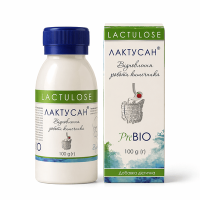
The dietary supplement Prelaksan (syrup) is recommended for constipation due to lactulose. In addition, Prelaksan helps to normalize intestinal microflora, improve metabolism. This remedy will help to gently, effectively and as naturally as possible improve the functioning of the digestive tract, get rid of such an unpleasant pathology as constipation.


-200x200.jpg)