Cart
Your shopping cart is empty!
It's never too late to make things right :)



The aim of the study.
1. To study the detoxification effect of the drug Lactusan on patients with toxic forms of goiter.
2. To study the immunomodulatory effect of Lactusan on patients with diabetes mellitus.
3. To determine the effectiveness of Lactusan in the treatment of patients with digestive diseases.
Materials and methods.
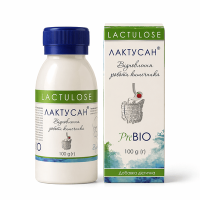
Used: Lactusan syrup, containing 40% lactulose, 12% lactose, 4% galactose and 1% ash.
The following were examined before and after treatment with Lactusan:
- 10 patients with thyrotoxic goiter,
- 42 patients with type 1 and 2 diabetes mellitus,
- 35 adult patients with digestive diseases (chronic hepatitis, chronic colitis, chronic pancreatitis),
- 25 children with digestive diseases (intestinal dysbacteriosis, chronic gastroduodenitis, chronic colitis).
In all control groups, against the background of traditional treatment for these diseases, patients took Lactusan 2 teaspoons 2 times a day for 7-10 days.
In patients with thyrotoxic goiter and diabetes mellitus, the effectiveness of Lactusan was monitored by changes in cellular and humoral immune factors.
The number of T and B cells was assessed using indirect immunofluorescence with monoclonal antibodies, the content of immunoglobulins of classes G, M, A using radial immunodiffusion according to Mancini, the level of circulating immune complexes (CIC) dependent chemiluminescence on a radiometric counter Beta-1.
In diseases of the digestive system, in addition to the study of bilirubin, transaminase, alkaline phosphatase, an ultrasound examination of the abdominal organs (liver, gallbladder, pancreas) was performed.
Change in immunological status in patients with thyroid dysfunction after the use of Lactusan.
Before treatment with Lactusan, patients were found to have a decrease in the number of T-lymphocytes, an increase in the level of circulating immune complexes (CIC), impaired neutrophil function in the form of a decrease in the digestive ability, and inhibition of the production of reactive oxygen species according to the spontaneous and stimulated chemiluminescence test.
After treatment with Lactusan, increased production of immunoglobulin class A, decreased CEC levels, increased phagocytic activity of neutrophils and normalization of their digestive ability, increased production of reactive oxygen species were noted.
Results of the immunomodulatory effect of Lactusan in the treatment of patients with diabetes mellitus.
Before treatment with Lactusan, in patients with diabetes mellitus, compared with healthy people, a decrease in the number of T lymphocytes, a decrease in the content of serum immunoglobulin class C, impaired neutrophil functions in the form of a decrease in the phagocytic number and phagocytic index, as well as a sharp drop in the production of reactive oxygen species by neutrophils were noted. In some patients, an increase in the concentration of immunoglobulins of classes A and M was detected.
Treatment of patients with diabetes mellitus with the use of Lactusan led to an increase in the number of T cells by 45%, B cells by 92%, increased production of immunoglobulin classes A (by 45.8%) and M (by 12%). The treatment did not affect the content of immunoglobulin class C, the level of circulating immune complexes and phagocytic indicators. Data from immunological studies in patients with diabetes mellitus were also analyzed depending on the types of this disease.
Both in patients with type 1 diabetes and in patients with type 2 diabetes, changes in the immunogram were noted, which corresponded to the overall data.
In particular, a decrease in the number of T-lymphocytes, a decrease in the content of serum immunoglobulin class G, impaired phagocytosis and neutrophil function were detected according to the spontaneous and stimulated chemiluminescence test. In some patients, an increase in the concentration of immunoglobulins of classes A and M was detected. The level of circulating immune complexes (CIC) was within the physiological norm.
In patients with type 1 diabetes, higher rates of stimulated neutrophil chemiluminescence were noted compared to similar data in patients with type 2 diabetes. According to other indicators of immunity, no significant difference was found in patients with type 1 and 2 diabetes.
After treatment in patients with type 1 diabetes, an increase in the number of T cells (by 68.5%), B cells (by 86.6%), increased production of immunoglobulin classes A (by 85.7%), immunoglobulin class M (by 29%), increased phagocytic activity was noted. The treatment did not affect the content of immunoglobulin class G, the level of circulating immune complexes and phagocytic indicators, as well as the function of neutrophils.
In patients with type 2 diabetes, the treatment also had a positive effect on a number of immunological indicators, but to a somewhat lesser extent. Thus, an increase in the number of T cells (by 45.2%), B cells (by 78.6%) cells, increased production of immunoglobulin classes A (by 30.7%), immunoglobulin class M (by 6.2%) was noted. The treatment did not affect the content of immunoglobulin class G, the level of circulating immune complexes, phagocytosis indicators, as well as neutrophil functions.
Studies have shown a positive effect of treatment with Lactusan in diabetes mellitus on a number of immunological indicators.
On the therapeutic efficacy of Lactusan in the treatment of gastroenterological patients.
The treatment with Lactusan (along with traditional therapy) of 35 adult patients was analyzed, including 17 with chronic hepatitis, 14 with chronic colitis, and 4 with chronic pancreatitis. Most patients were under 60 years of age.
During the study, attention was paid to changes in the clinical manifestations of the disease - pain in the epigastrium and right hypochondrium, the presence of discomfort, bitterness in the mouth, weakness, bowel disorders, as well as the content of transaminases, bilirubin, alkaline phosphatase, and the severity of dysbacteriosis. The comparison group consisted of identical patients who received only traditional therapy.
Under the influence of treatment, all patients showed improvement, confirmed by the dynamics of symptoms and blood tests (bilirubin decreased on average from 80 mmol/l to 22 mmol/l, transaminases from 87 to 45 units, and alkaline phosphatase from 190 to 125 units).
The duration of bed rest was on average 19 days/day in chronic colitis, 28 days/day in chronic hepatitis, 25 days/day in chronic pancreatitis. Compared to the comparison group, the duration of bed rest decreased by 4 days. There were no complications when prescribing the drug. In 2 patients with dysbacteriosis, in whom after 1 course there was no complete restoration of microflora, it was restored after a second course.
In the pediatric department, 25 children were treated with Lactusan: up to 1 year old - 6 people, from 1 to 3 years old - 10 people, from 3 to 7 years old - 5 people, over 7 years old - 4 people. Boys - 13, girls - 12.
Main clinical diagnoses: intestinal dysbacteriosis - 17 people, chronic gastroduodenitis - 4 people, chronic gastritis - 2 people, chronic colitis - 2 people, the last patients also had dysbacteriosis.
Intestinal dysbacteriosis: staphylococcal - 10, proteus - 1, colibacillary - 2, associated - 12. In all cases, clinical improvement was noted: normalization of bowel movements, reduction of flatulence and abdominal pain, improvement in well-being.
Laboratory indicators: in feces on microlandscape after 1 month S.aureus was isolated in 4 children, E. coli in 1 child, Pr. Vulgaris – 1. In cases of associated dysbacteriosis – 5 people, E. coli (hemolytic and lactose negative) – 5 people.
In all cases, the number of colonies of normal flora increased. In 1 child with iron deficiency anemia, in addition to improving the microlandscape, the indicators of “red blood” - Hb and erythrocytes improved. In all cases, the coprogram showed improvement in carbohydrate digestion.
Thus, Lactusan is promising in the treatment of diseases of the liver, biliary tract and intestines as a means that eliminates violations of the intestinal biocenosis and affects metabolism, and thereby a positive outcome of the disease.
CONCLUSIONS
1. The hematoprotective function of lactulose has a normalizing effect on the immune system of patients with toxic goiter, and therefore Lactusan can be used both for conservative treatment of thyrotoxicosis and for preoperative preparation.
2. The inclusion of Lactusan in the traditional treatment regimen for diabetes mellitus types 1 and 2 provides an increase in T cells by 45%, B cells by 92%, immunoglobulins by 12%-45.8%, which makes the use of Lactusan mandatory in the treatment of patients with diabetes mellitus with local and general purulent.
3. Lactusan is promising in the treatment of diseases of the liver, biliary tract and intestines as a means that eliminates intestinal biocenosis disorders and positively affects metabolism, and thereby, on a positive outcome of the disease.