Cart
Your shopping cart is empty!
It's never too late to make things right :)


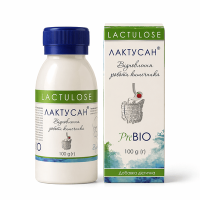
The aim of the study was to determine the effectiveness of Lactulose monotherapy for intestinal dysbiosis at a dose of 5 ml in children under three years of age and at a dose of 10 ml in children older than three courses for 2 weeks.
The effectiveness of treatment was assessed by comparing the intestinal microbial landscape before and after treatment. Bacteriological examination and assessment of the degree of dysbiosis were carried out in accordance with the methodological recommendations of the Moscow Research Institute of Epidemiology and Microbiology named after G.M. Gabrychevsky from 1986.
38 children with viral hepatitis and gastropathology were under observation at the age of: from 0 to 3 years - 5 children, from 4 to 7 - 10 children, from 8 to 11 years - 8 children, from 12 to 15 - 14 children.
Among the examined there were 24 children with concomitant allergic diseases, including 8 with exacerbation of allergic dermatoses.
Before treatment, dysbacteriosis of the I degree was established in 11 patients, dysbacteriosis of the II degree in 13 patients, dysbacteriosis of the III degree in 14 patients.
The most frequently detected were Escherichia coli with hemolytic properties (45%), Citrobacter (20%), Enterobacteriaceae (20%), Klebsiella (15%), microbial associations (40%).
Examination after the course of treatment showed an improvement in biocenosis indicators in 22 patients (57.9%), including in dysbacteriosis of II and III degree, an increase in the level of bifidobacteria to 109 in 18 out of 27 (66%) patients, a decrease in the seeding of conditionally pathogenic flora in 13 (481TP) ), in 1 child - the disappearance of pathogenic E - Coli O 144.
In 3 out of 8 children with exacerbation of allergic dermatosis, a decrease in allergic manifestations was noted without additional prescription of sorbents and (or) antihistamines.
In dysbacteriosis of the I degree with a normal initial level of bifidobacteria, an improvement in the biocenosis was registered in 4 patients, which was expressed in the normalization of the number of Escherichia coli, lactic acid bacteria. In 12 (32%) patients, there was no any dynamics.
Side effects in the form of increased frequency of bowel movements up to 2-3 times a day were observed in 4 patients, a tendency to flatulence in 2 (children under one year). In 6 children with initial complaints of a tendency to constipation, daily bowel movements were observed during treatment.
CONCLUSIONS
Thus, even when prescribing the minimum dosage of Lactulose syrup, a positive effect is observed in 58% of cases. With an increase in the dose, improvement in results is expected.
The advantages of the drug also include the possibility of using a relatively small course, the absence of negative organoleptic properties.
The prescription of the drug to patients with a tendency to constipation is also relevant.


-200x200.jpg)