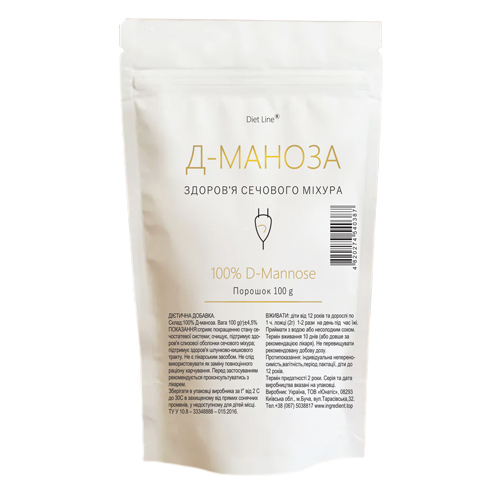
Dosage: How Much D-Mannose Should You Take?
Although D-mannose is generally considered safe because it occurs naturally in many foods, doses higher than those consumed in the normal diet can be toxic or otherwise harmful. In addition, little is known about the long-term safety of D-mannose at any dose.
Currently, there are no standard recommendations for D-mannose dosage.
Adults are recommended to take 1-2 teaspoons without a top per day.
Do not exceed the daily dose. Consult your doctor before taking D-mannose. Pregnant women and children can take it only after consulting a doctor.
FREQUENT QUESTIONS
Can I take D-mannose every day?
The dose for UTI prevention is 1500-2000 mg (or half a teaspoon) once or twice a day. You can safely take this "preventative" dose for as long as you like. Bacteria do not develop resistance to D-mannose
How does D-mannose affect urine?
d-mannose is a monosaccharide that can inhibit bacterial adhesion to the urothelium after oral administration. Several clinical studies have shown the effectiveness of d-mannose in the prevention of recurrent UTIs; they also provided limited evidence for the efficacy of d-mannose in emergency therapy.
Is D-mannose a natural antibiotic?
The natural sugar d-mannose is being considered as an alternative to antibiotics because of its ability to mask the bacterial adhesin FimH, thereby preventing its binding to urothelial cells.
Does D-mannose work on all bacteria?
D-mannose can effectively relieve acute symptoms of UTIs caused by fimbria type 1-positive bacteria. Further studies are needed to confirm whether D-mannose is effective in the treatment of recurrent UTIs or whether it is only useful for treating symptoms.
Can D-mannose replace antibiotics?
There is less evidence that D-mannose treats active UTIs. However, studies have shown that when used in addition to antibiotics, it can help relieve symptoms. 10 It is important to remember that supplements should not replace conventional treatment.
Is D-mannose a prebiotic?
Some research suggests that D-mannose may also play a beneficial role as a "prebiotic" by increasing the growth of beneficial bacteria.
Is D-Mannose Good For Candida?
If you have been prescribed antibiotics for cystitis, using D'Mannose as a preventative can reduce antibiotic dependency, resulting in fewer episodes of candida overgrowth
How long can you safely take D-mannose?
By mouth: D-mannose is probably safe for most adults when taken for 6 months. It can cause diarrhea and nausea. There is not enough reliable information to know if d-mannose is safe or what the side effects might be if taken for more than 6 months.
Does mannose raise blood sugar?
Compared to real glucose, which is easily absorbed and has a glycemic index of 100, mannose must first be converted to fructose and then to glucose, which significantly blunts the insulin response and reduces its effect on blood sugar.
Is D-mannose good for the prostate?
D-mannose has been used successfully for a number of male urinary problems, including bacterial prostatitis.
What is the difference between cranberry extract and D-mannose?
Supplemental D-mannose acts as a molecular decoy that prevents bacteria from attaching to and infecting bladder cells. On the other hand, cranberry extract acidifies the urine and also reduces the adhesion of bacteria to the walls of the urinary tract.
Can bacteria become resistant to D-mannose?
D-mannose does not kill bacteria at all, which is good. Thus, it is theoretically impossible to develop resistance to D-mannose