


Cart
Your shopping cart is empty!
It's never too late to make things right :)


-500x500.png "OMEGA-3 Dietline caps 500 mg #60")
-500x500.png "OMEGA-3 Dietline caps 500 mg #60")


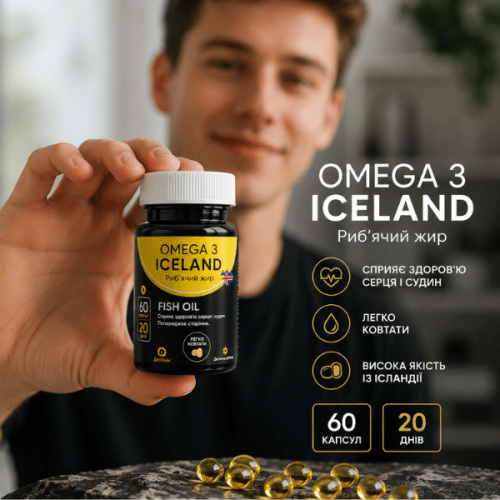
Fish oil OMEGA-3-500 TM Dietline with an ideal composition of fatty acids and impeccable quality. Convenient for swallowing.
The fish oil is produced in Iceland according to GMP (API), HACCP and FSSC 22000 certificates. The fish oil complies with all major pharmacopoeias and the GOED monograph.
Fish oil, Iceland, contains at least 30% Omega 3 fatty acids: 18% EPA (eicosapentaenoic acid); 12% DHA (docosahexaenoic acid). Fish oil OMEGA-3-500 Iceland with an ideal composition of fatty acids and impeccable quality. It is the composition of polyunsaturated acids and purity that affect the beneficial properties of this product.
Fish oil is a means of preventing many serious diseases, for example, heart attack, stroke, atherosclerosis, strengthens the immune system, improves brain function, helps to cope with stress and get rid of depression. Moreover, this supplement is indispensable for the growth and development of children.
A leading producer of fish oils. Research and development, quality control at all stages of production - the main principle in the company's work since 1938. Underscoring the high quality of the products, the fish oil is manufactured according to GMP (API), HACCP and FSSC 22000 certifications. The fish oil complies with all major pharmacopoeias and GOED monographs. And also comply with all official regulations regarding environmental pollutants.

What are omega-3 fatty acids?
Omega-3 fatty acids are a type of fat that the body cannot produce on its own. It is recommended that healthy people consume 500 mg of EPA plus DHA, and people with heart disease almost double that amount (up to 1,000 mg/day).
What are the best sources of omega-3 fatty acids?
Fish is the best food source of omega-3 fatty acids. Some plants also contain omega-3 fatty acids.
What do EPA, DHA and ALA mean?
There are two types of omega-3 fatty acids in fish – eicosapentaenoic acid (EPA) and docosahexaenoic acid (DHA). The form of omega-3 in plants is called alpha-linolenic acid (ALA).
How do omega-3 fatty acids help improve my health?
Research shows that omega-3 fatty acids can improve your cardiovascular health. But these are not all the benefits of including omega-3 fatty acids in your diet. Daily consumption of Omega-3 reduces the risk of:
Omega-3 fatty acids can also:

Compare whether you are eating enough Omega-3 fatty acids when eating fish
Mackerel
Portion size: 100 grams. Amount of Omega-3 fat: 2.5–2.6 g
Salmon (wild)
Portion size: 100 grams. Amount of Omega-3 fat: 1.8 g
Herring
Portion size: 100 grams. Amount of Omega-3 fat: 1.3–2 g
Bluefin tuna
Portion size: 100 grams. Amount of Omega-3 fat: 1.2 g
Halibut
Portion size: 100 grams. Amount of Omega-3 fat: 0.9 g
Striped bass
Serving Size: 3 ounces (100 grams)
Amount of Omega-3 fat: 0.8 grams
Sea bass (mixed species)
Portion size: 100 grams. Amount of Omega-3 fat: 0.65 g

How much Omega 3 do I need?
The American Heart Association recommends that patients with NO history of heart disease eat at least 200-400 grams of fish per week. A variety of fish should be included here.
There are no reviews for this product.
-200x200.png "OMEGA-3 Dietline caps 500 mg #60")
-200x200.png "OMEGA-3 Dietline caps 500 mg #120")


-74x74.png)

-74x74.png)
-80x80.png)


-80x80.png)
